CEO
A mishandled insider investigation can create more legal trouble than the original breach itself. The way evidence is collected and privacy is managed often decides whether a business faces lawsuits or regulatory action.
A strange login, a file opened at an odd hour, a tip from a coworker who noticed something off—this is usually how an insider threat surfaces, as a small signal rather than a clear alarm. What happens next, in the response to that signal, is where things tend to unravel.
Security teams are trained to move fast once a signal appears, yet speed is exactly what turns a routine response into a liability: the steps taken under pressure can ripple out past IT and into legal and HR territory. Mishandling evidence or crossing a privacy line mid-investigation can leave a company facing a bigger problem than the one that triggered the response in the first place.
Consider what happens when someone accesses personal emails without a clear policy backing that decision, or when an action goes undocumented in the rush to contain a threat—either one can turn a security response into a lawsuit. For businesses in California, where privacy law leaves little room for improvisation, the stakes climb even higher.
Catching the threat is only half the job; managing the investigation well enough that it doesn't become its own liability is the other half. Recognizing where the process typically breaks down is the first step toward making sure a response doesn't backfire.

Most businesses focus their energy on stopping the threat itself, which is precisely why so few notice how easily the investigation built to stop it can veer off course. Acting fast feels like the right instinct, but speed often buys shortcuts—skipped documentation, no notice to HR before action is taken against an employee.
Once those steps go missing, the investigation stops being a safeguard and becomes a liability in its own right. Evidence gathered outside a company's own stated policies may not hold up if an employee challenges it, and worse, that same evidence can end up fueling a wrongful termination claim instead of defending against one.
California's privacy regulations raise the difficulty further: accessing personal data without a clear, documented reason can violate state law regardless of intent. Good intentions do not substitute for a defensible process—how sensitive data gets handled matters just as much as what the investigation ultimately finds.
Beyond legal fees, there's a quieter cost. A mishandled investigation erodes trust across the team, and once employees start to doubt that their privacy is respected, morale suffers, and every investigation that follows becomes harder to run.
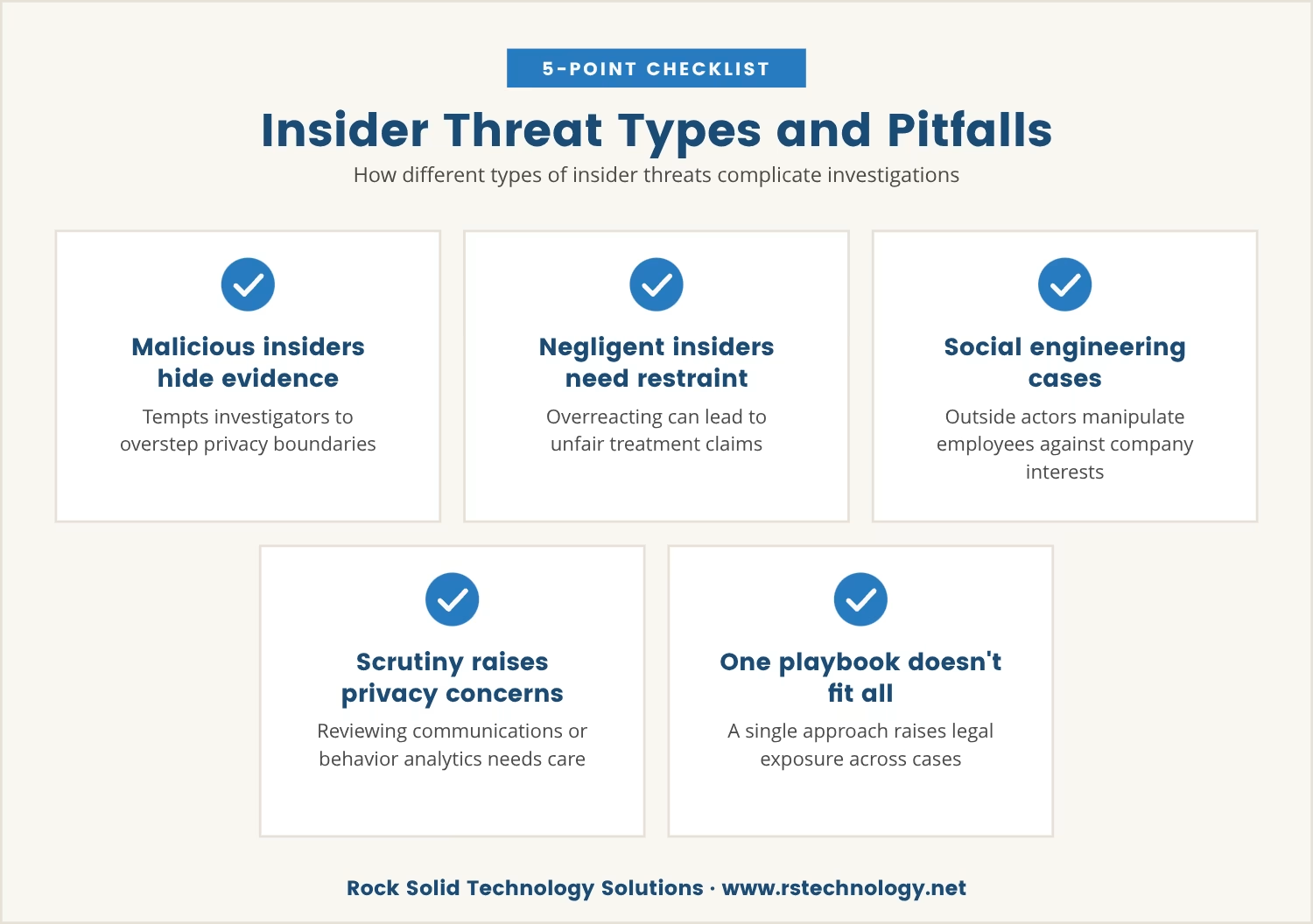
Insider threats don't all take the same shape, so each type forces a different response and carries its own pitfalls. Some stem from clear malicious intent, while others trace back to carelessness or a simple gap in training.
A malicious insider often hides or destroys evidence, which tempts investigators to dig deeper than policy allows—and that's exactly where privacy boundaries start to blur. A negligent insider calls for the opposite instinct: someone who made a mistake without meaning harm doesn't warrant the same response, and overreacting with unnecessary discipline or termination can open the door to claims of unfair treatment.
A third pattern involves social engineering, where an outside actor manipulates an employee into acting against the company's interests. Investigating this kind of case usually means reviewing communications or behavior analytics, and that scrutiny raises its own privacy concerns if it isn't handled with care.
Because the scenarios differ so much, a single playbook applied across all of them raises legal exposure rather than lowering it—particularly once sensitive data or employee rights enter the picture.
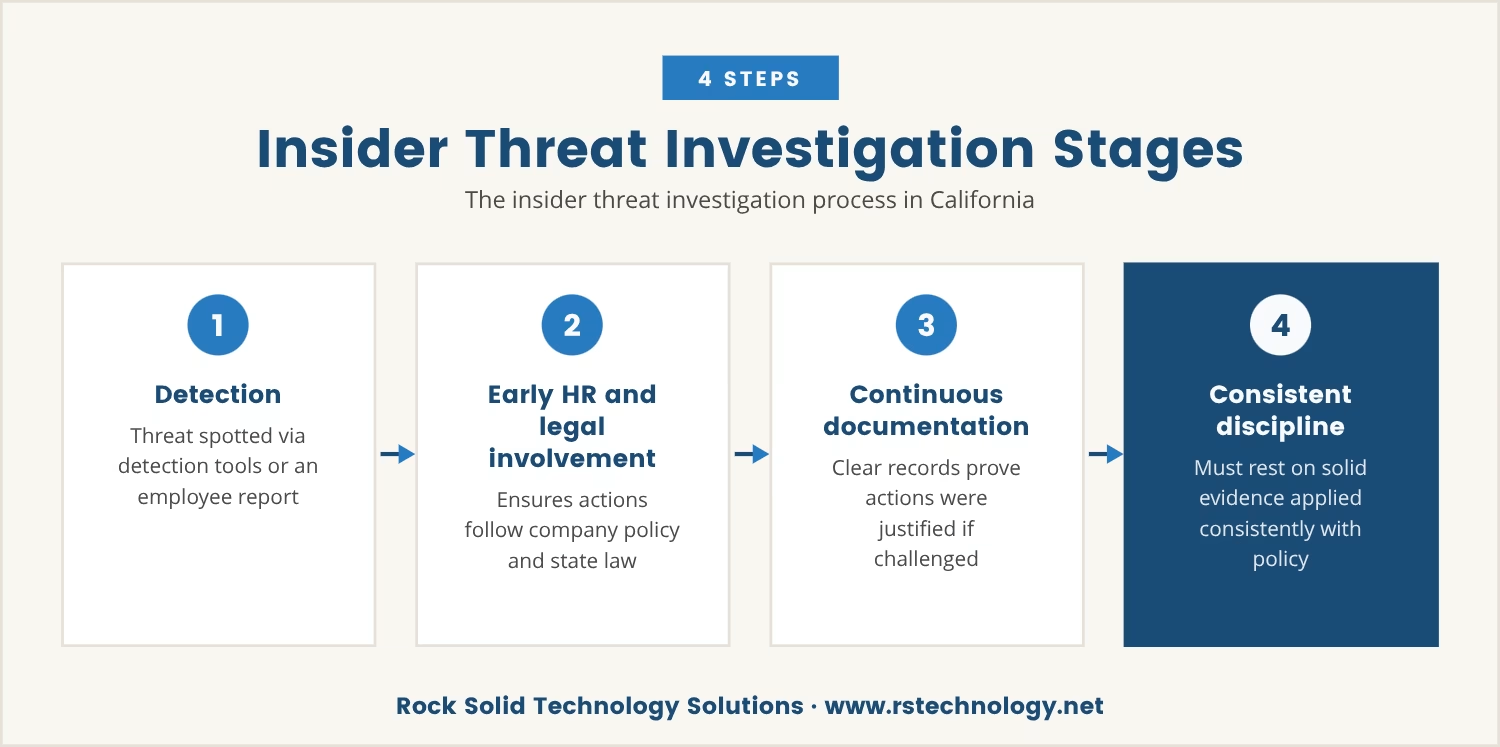
Investigating an insider threat in California means balancing security needs against strict privacy law at every stage. The process generally unfolds in a sequence, and each stage carries its own point of failure.
It starts with detection—security teams spot a possible threat through insider threat detection tools or an employee report—and from there they must decide what evidence to collect and how to do it without violating privacy rules.
From that decision point, HR and legal belong in the room early, not after the fact, so that any action taken, whether suspending access or interviewing the employee, follows both company policy and state law.
Running alongside every stage is documentation, which is what makes the difference if a decision is ever challenged later: without clear records, it's difficult to prove the actions taken were justified, and California's strong employee protections around privacy and due process make that proof even more necessary.
The process closes with discipline, and any action taken at that stage has to rest on solid evidence applied consistently with policy—skip that consistency, and a security incident risks becoming a legal dispute that costs more than the original breach.
Even well-meaning teams make mistakes during an insider threat investigation, and certain missteps show up again and again, each with its own cost.
When IT acts alone, its decisions may not align with employment law or internal policy. That gap is exactly what wrongful termination claims are made of.
Collecting or sharing personal information without proper cause can violate privacy law, especially in California. Regulatory fines often follow.
Failing to keep detailed records of each action taken leaves those decisions hard to defend later. In court, a missing record tends to work against you, not for you.
Applying rules differently to similar cases can look like discrimination from the outside. That appearance alone is enough to trigger legal challenges from employees.
Accessing personal devices or communications without clear policy backing crosses into serious privacy violation territory. That overreach is a common trigger for lawsuits and regulatory scrutiny.
Given how many ways an investigation can go wrong, a strong insider threat program has to do more than catch bad actors—it has to protect the business from the legal trouble those missteps invite. A few practical steps keep the response on track:
Following these steps shifts the odds: a security response is far less likely to turn into a legal problem.
Since so much risk comes from reacting late, catching issues early is what prevents both the security breach and the legal headache that can follow it. Modern insider threat detection tools use behavior analytics to flag unusual activity before it escalates into a crisis.
That speed is only half the equation, though—proactive monitoring still demands careful planning, because without clear boundaries, even well-intentioned monitoring can drift into privacy violations.
Sustaining that balance means revisiting policy on a regular basis. As laws and technology shift, the response plan built around them has to shift too, or it stops being compliant and effective at the same time.
Pulling these threads together, the real risk was never just the insider—it's how the investigation around that insider gets handled. A single mistake in that process can create legal exposure that dwarfs the original threat.
Businesses that treat every investigation as both a security matter and a legal one are less likely to face lawsuits or regulatory action down the line. The key lies in balancing urgency with caution, making sure every step taken is documented and justified as it happens, not reconstructed afterward.
If the insider response process hasn't been reviewed recently, now is the moment. Are the policies in place clear enough to protect both the business and the employees working within it?

Many organizations with 15 to 70 users find themselves unsure about the legal risks tied to insider investigations. At Rock Solid Technology Solutions, we understand how easily a well-intentioned response can go wrong.
We invite you to see how our team approaches insider investigations with both security and compliance in mind. Let’s talk about how your process can protect your business and your people.
You can try our services with no long-term commitment—leave anytime we stop delivering results that protect your business.
A well-managed insider risk investigation follows company policy, brings in HR and legal early, and documents every step along the way. Skipping any of these leaves the process exposed to legal or privacy complications, which is why regular review of the procedure matters as much as the procedure itself.
A malicious insider acts with intent to harm the company, such as stealing data or sabotaging systems. A negligent insider causes harm through mistakes or carelessness instead, like clicking a phishing link or mishandling sensitive data, and the two require distinctly different investigation approaches.
Security teams should access only the data necessary for the investigation and follow documented procedures without exception. Bringing HR and legal into the process helps keep actions compliant with privacy law, and training on local regulations, especially in California, keeps investigators from overstepping boundaries unintentionally.
Behavior analytics tools track patterns and flag unusual activity, such as file access outside normal hours or unusually large data downloads. These signals help teams catch potential threats early, though using them responsibly still requires clear policy that respects employee privacy.
Yes—proactive monitoring can catch risks before they escalate, particularly when alerts for suspicious activity and regular review of access logs are built into routine practice. That monitoring still needs to be weighed against employee privacy, since tipping too far in either direction invites its own complications.

Dan Gross brings nearly 30 years of experience in technology integration, IT support, and cybersecurity. As the leader of Rock Solid Technology, he helps businesses leverage technology to improve operations, strengthen security, and solve complex IT challenges. He is also a sought-after IT conference speaker, sharing insights on technology, leadership, and business.