CEO
Cloud cost optimization fails most often because no one is truly accountable for spending, not because of bad pricing or poor tools. Without clear governance, businesses keep overspending regardless of the solutions they buy.
Picture a mid-sized company that spins up a handful of new cloud environments for a product launch, hits its deadline, and then simply moves on—leaving half those resources running, quietly billed, for months. No one notices until finance asks why the invoice doubled.
That scenario is common enough to be unremarkable, and it points to something sharper than a billing accident: cloud cost optimization fails most often not because prices are bad or tools are weak, but because no one owns the job of controlling spend in the first place.
Plenty of businesses respond by chasing steeper discounts or shopping for new dashboards, yet the fix rarely lives there. One industry survey found that 71% of organizations now have a formal cloud center of excellence, which suggests the market already senses this and is building structure and accountability to compensate.
That shift matters because cloud cost optimization was never just about finding savings—it is about making sure every dollar spent in the cloud is tracked, justified, and managed by someone in particular. Absent strong governance, even the sharpest tool or the best-negotiated deal cannot stop waste on its own. The rest of this article looks at why governance gaps, rather than pricing or technology, are the main reason businesses keep losing money in the cloud.

Setting a budget or negotiating a discount feels like progress, but neither one watches the account day to day. When no one is clearly responsible for monitoring and managing cloud costs, a small, forgettable oversight compounds into an expensive one within weeks.
That absence of ownership shows up concretely: a test server left running past its project's end, workloads provisioned for peak demand that never arrives, a team that genuinely cannot say what it is spending or why. The pattern deepens in organizations where cloud usage is scattered across multiple departments, each assuming someone else is watching the meter.
Without one clear point of accountability, savings opportunities slip past unnoticed, and even well-meaning teams end up duplicating infrastructure or missing bulk discounts they didn't know existed. In California, where many businesses run operations across multiple locations, that complexity multiplies—more environments make it harder to trace who is using what, and why. The outcome is costs that keep climbing even when a company believes it has controls in place.
Faced with rising bills, many companies reach first for the latest cloud cost optimization tools or a better rate from their provider. Both can help at the margins, but neither touches the root cause.
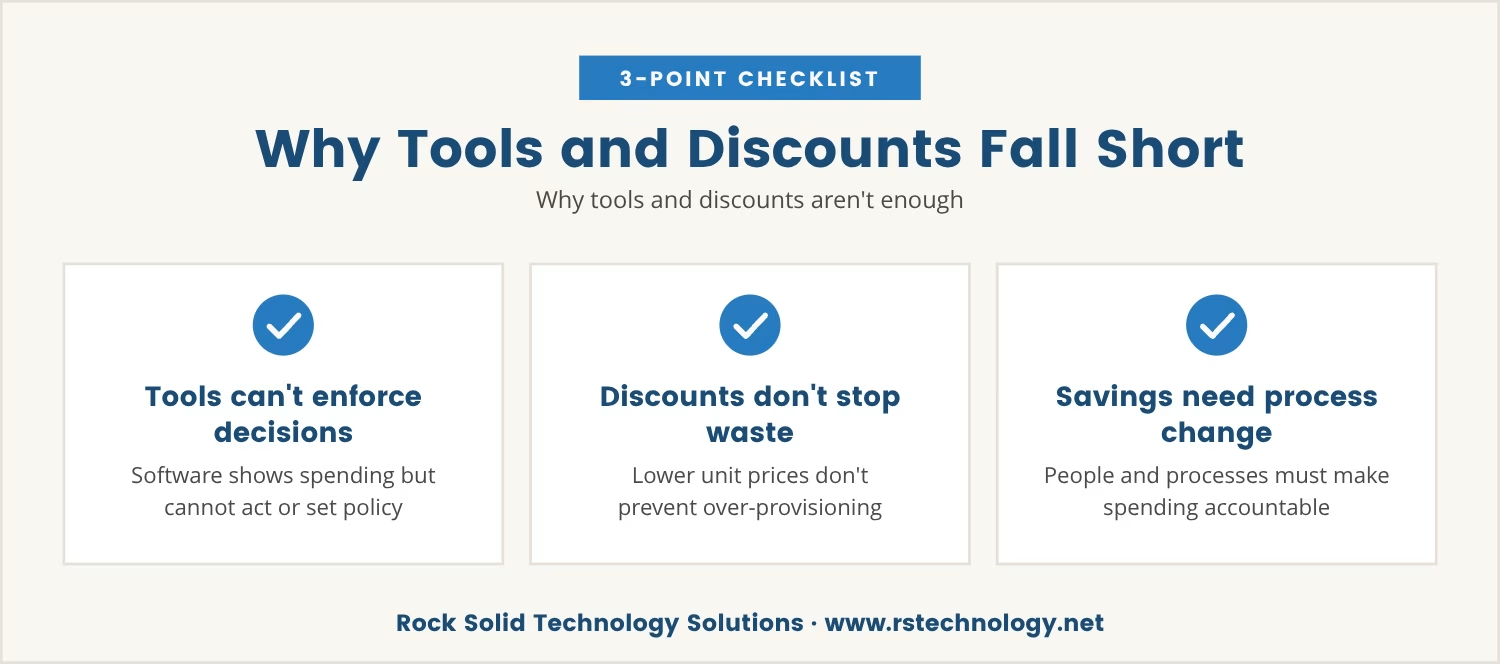
A tool can show exactly where the money is going, yet it cannot make a decision or enforce a policy on its own. A discount lowers the unit price, but it does nothing to stop a team from paying for three times the capacity it needs.
Weak governance is why those gaps persist: teams ignore alerts, shrug off recommendations from cost management software, and the business keeps paying for resources sitting idle regardless of how sophisticated the monitoring gets. Real savings, then, come from changing how the business thinks about and manages cloud costs in the first place—putting people and processes in place so every dollar spent has to answer for itself.
Governance is the backbone that makes cloud cost optimization actually work, because it sets clear policies, assigns responsibility, and holds everyone to the same rules.
That starts with naming who is accountable for cloud spend—a dedicated FinOps team, a cloud center of excellence, or a specific manager—and the label matters less than the authority behind it: someone has to be able to make decisions and enforce them. Build on that foundation with regular reviews of usage and cost, and problems get caught while they're still small instead of after they've compounded.
Once that structure exists, tools and discounts stop trying to do the whole job alone and start reinforcing policy instead of standing in for it.
Accountability is not just a name on an org chart; it's a system built from several elements that work together to keep cloud costs in check. Each pillar below closes a piece of the governance gap.
Every cloud resource—a server, a database, a storage bucket—should have a named owner responsible for watching its usage and cost. That single point of contact is what turns "someone should check this" into someone actually checking it.
Budgets need to be visible and realistic, not just set once and forgotten. Teams should know exactly how much they can spend and what happens the moment they go over.
Frequent reviews surface trends, catch errors, and reveal savings before they're lost to time. Reports work only if they're easy to understand and actually shared with the people who can act on them.
Policies for shutting down unused resources or scaling workloads hold up best when enforced automatically rather than left to memory. Automation removes the human error that manual follow-through tends to invite.
Ongoing training keeps teams current on cloud cost management practices as those practices evolve. Open communication is what keeps everyone aligned on responsibilities instead of assuming someone else has it covered.
Even companies with good intentions fall into patterns that quietly erode governance, and these gaps tend to hide until the bill makes them impossible to ignore.
Closing those gaps is less a one-time fix than a culture shift, and it takes time before it pays off. Once teams understand that every dollar spent in the cloud matters to someone specific, their everyday decisions start to reflect it.
That shift starts small: folding cost management into routine conversations, and encouraging teams to question their own usage rather than waiting for a quarterly audit to do it for them. Recognizing teams that find savings or improve efficiency reinforces the behavior and signals that accountability is genuinely valued, not just mentioned in a policy document.
If you're not sure where your own business stands, ask yourself: who is responsible for your cloud bill today, and do they have the tools and authority to manage it?
Lasting savings follow from putting governance at the center of a cloud cost optimization strategy, which means treating accountability as a priority at every stage—planning, budgeting, and the daily grind of operations alike.
Businesses that lead with governance get more out of the same tools and the same discounts, because they catch problems early and keep waste from accumulating in the first place. Close the governance gap and the budget stops being a monthly surprise, which is what sets a business up for durable success in the cloud.

Many organizations with 15 to 70 users find themselves stuck with rising cloud bills, even after investing in new tools or negotiating better rates. At Rock Solid Technology Solutions, we understand how frustrating it is to see costs climb when you think you’ve done everything right.
If you want to see how we approach cloud cost governance—or just want to talk through your current setup—reach out to us for a conversation.
Try our services with no long-term commitment—if we stop delivering, you can leave at any time.
Make policies clear and easy to understand, then assign specific responsibilities to named team members. Use automated alerts to prompt key actions like shutting down unused resources, and review compliance regularly so expectations stay visible.
Identify unused or underused resources and right-size workloads before touching anything that affects service quality. Pair monitoring tools with clear accountability so flagged issues actually get acted on, not just logged.
Track spending trends against budget over time and watch for fewer unexpected charges and more predictable monthly bills. If teams are actively reviewing and adjusting their own usage, the strategy is likely on track.
A dedicated person or team—such as a FinOps group or cloud center of excellence—should own this responsibility, with the authority to make decisions and the tools to monitor and control costs across the organization.
Frequent budget overruns, unused resources left running, and teams unsure of their own roles are all signs governance needs work. Regular cost reviews paired with clear ownership are usually what closes that gap.

Dan Gross brings nearly 30 years of experience in technology integration, IT support, and cybersecurity. As the leader of Rock Solid Technology, he helps businesses leverage technology to improve operations, strengthen security, and solve complex IT challenges. He is also a sought-after IT conference speaker, sharing insights on technology, leadership, and business.